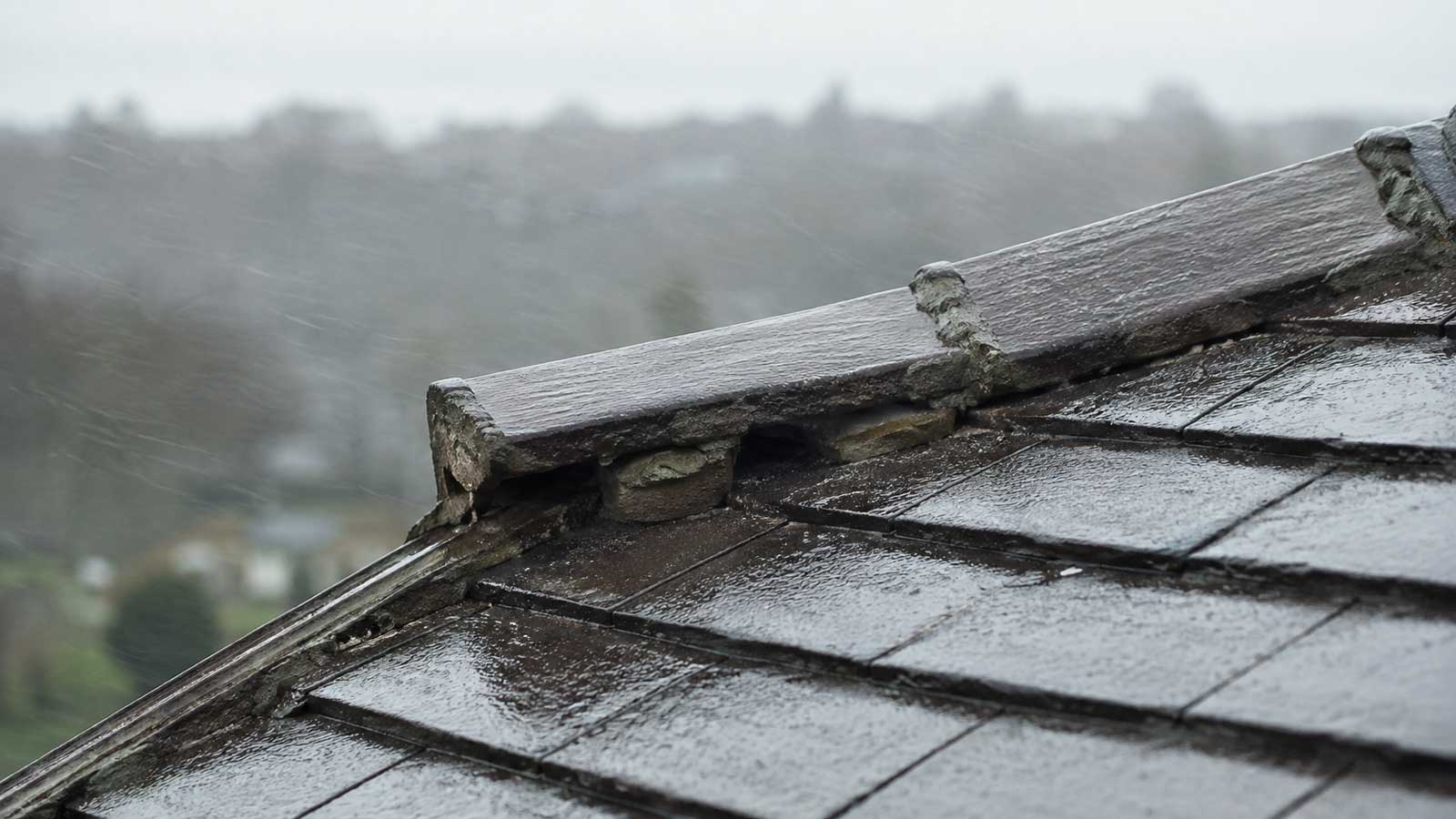
Record the wind side
If the leak appears only during strong wind, note which side of the house is taking the weather. Rain can be driven beneath laps, against chimney flashings, under ridge details or into small openings that shed vertical rain without trouble.
The same roof may stay dry through hours of gentle rain.
Look at side laps and junctions
Slates and tiles rely on overlap. A piece that has shifted sideways can reduce cover even if it has not slipped down. At chimneys and walls, wind can push rain against upstands and corners.
Verge edges on exposed gables also deserve attention.
Photograph the area before work starts if you can do so from a safe position. It gives you something concrete to compare with the finished repair.
Loft clues can be brief
A wind-driven leak may wet a small area and then dry before anybody inspects it. Look for recent tide marks on felt or timber and check rusty nail points. A torch used during rain from safe loft boarding can sometimes reveal the route.
Do not touch electrical wiring where water is present.
Repairs need to respect the direction of flow
Sealant applied to the visible lower edge can trap or redirect water. Roofing details are arranged so upper layers overlap lower ones.
A repair that restores the lap is usually more reliable than trying to glue water out from the surface.
Need somebody to look at the roof?
If you want to ask local contractors about the repair, describe the symptom and include anything you have noticed about the weather or the part of the roof involved.
Request roofing quotesQuote requests are provided by MyJobQuote, an independent third-party service.