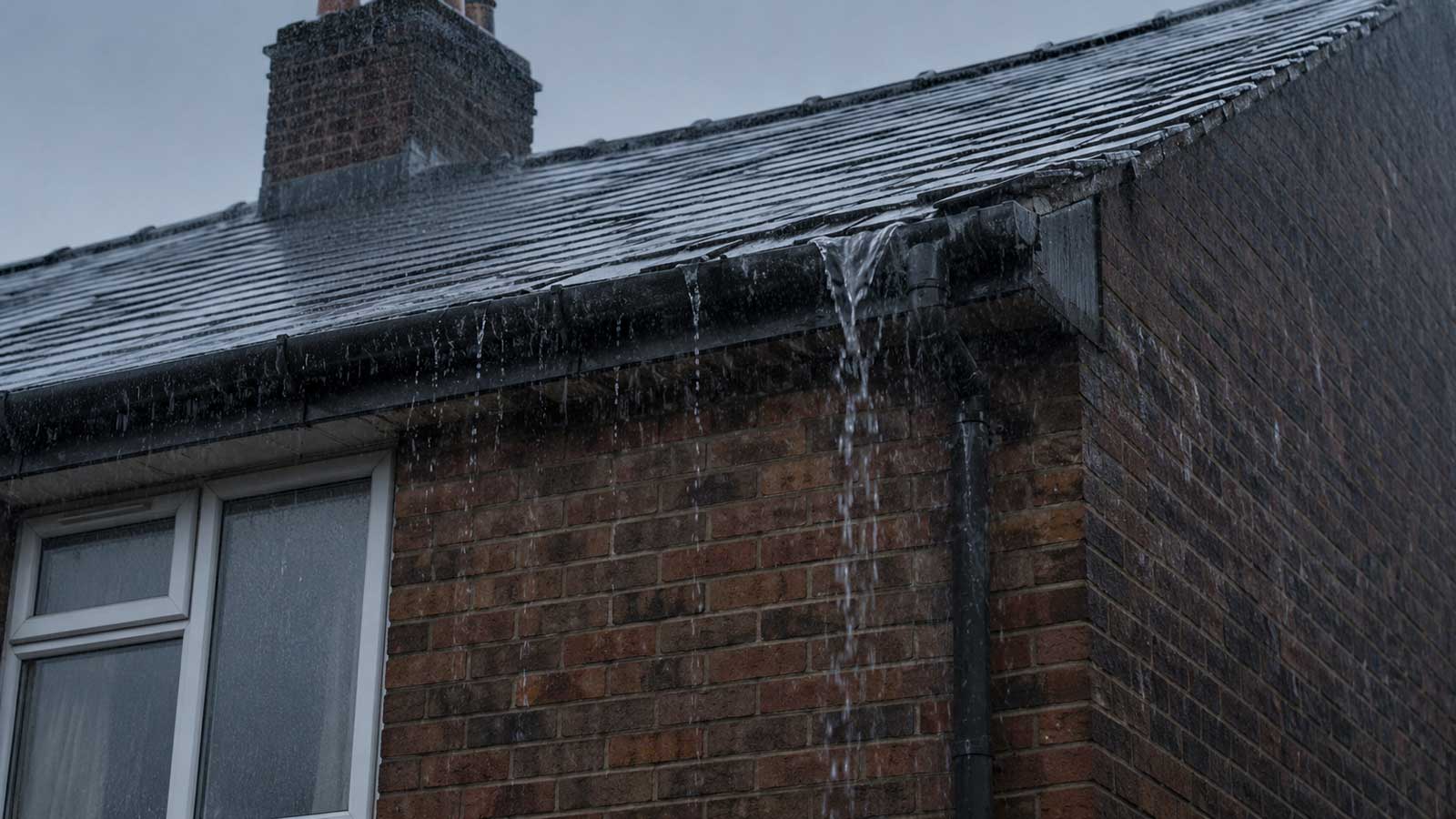
Gutters before prolonged rain
Clear heavy leaf build-up and make sure outlets run. Watch gutters during rain if you can do so from indoors or safe ground. Water behind a fascia or down the wall deserves attention.
Do not wait for icicles or overflowing water to prove there is a blockage.
Loft after a cold night
Condensation often becomes obvious when outdoor temperatures fall. Check for widespread droplets on felt or nail points and make sure extract ducts have not come loose.
A single wet patch below a roof detail after rain is more suggestive of an external leak.
Photograph the area before work starts if you can do so from a safe position. It gives you something concrete to compare with the finished repair.
Loose coverings
Wind can move already weakened slates, tiles and ridge pieces. Look for changes after storms and for debris on the ground.
Avoid going onto the roof to clear snow or inspect minor defects. Snow hides edges, openings and fragile coverings.
Small defects before freezing weather
Water entering small cracks in mortar or masonry can worsen when freezing conditions follow. Chimney pointing and exposed verge mortar are worth keeping an eye on.
Arrange repairs according to actual condition and safety. Cosmetic weathering can wait; loose high-level materials should not.
Need somebody to look at the roof?
If you want to ask local contractors about the repair, describe the symptom and include anything you have noticed about the weather or the part of the roof involved.
Request roofing quotesQuote requests are provided by MyJobQuote, an independent third-party service.