Inside the house
Move furniture and electrical items away from the wet area. Use containers for drips and protect floors. If water is close to light fittings or wiring, switch off the affected circuit only if you can do so safely and get appropriate electrical advice.
Do not climb into a loft where footing is unsafe or water is near electrics.
Outside
Stay on the ground. A storm-damaged roof may have loose tiles that are not visible from below. Photograph what you can and keep people away from any area where pieces could fall.
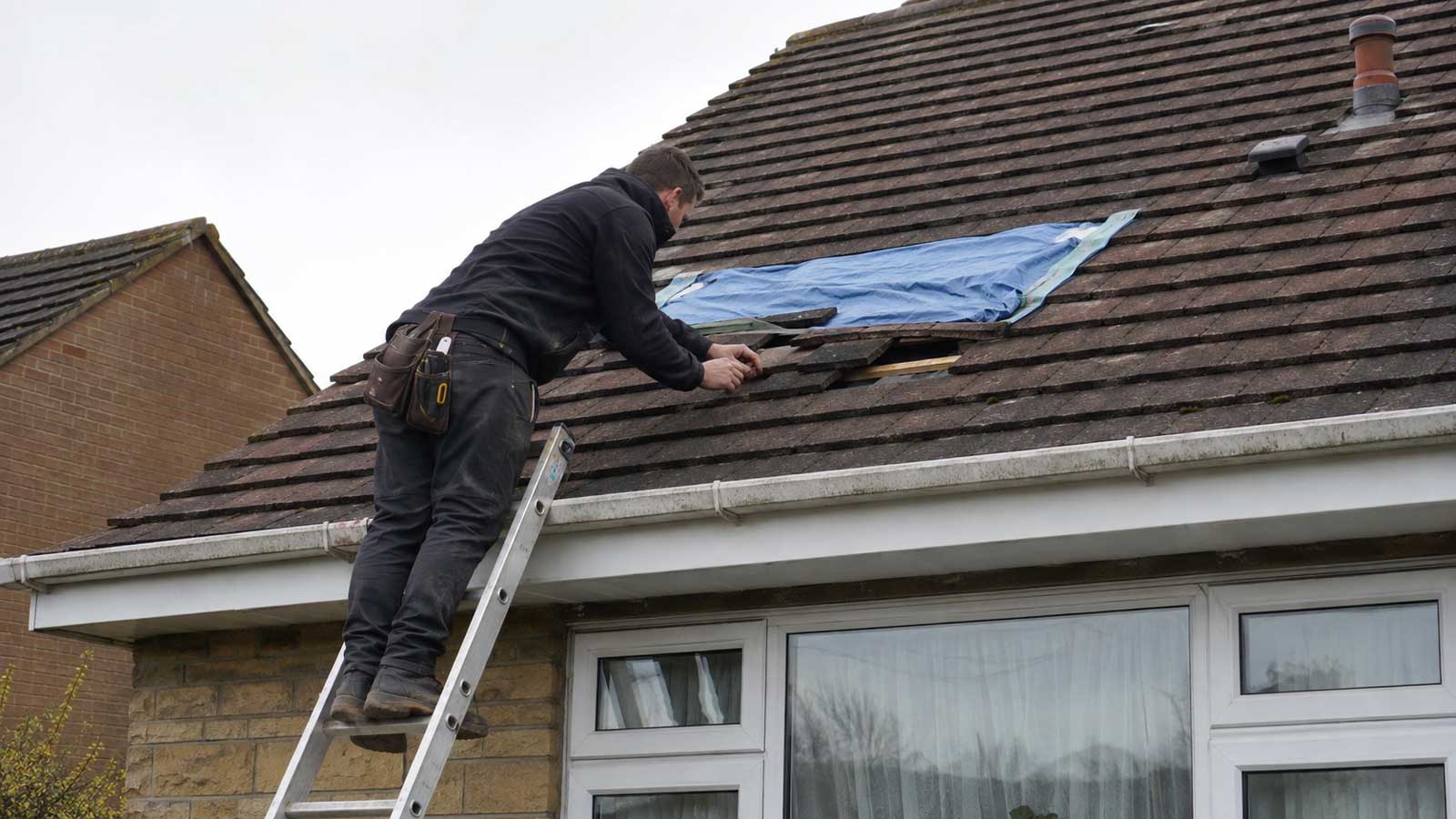
Temporary sheeting at height is a contractor's job, not something to improvise from a ladder in bad weather.
Temporary versus permanent
Emergency work may involve securing loose material or weathering a small area until safe access, matching slates or better conditions are available. Ask the contractor to say clearly what still needs doing.
A temporary patch can be perfectly sensible. Problems arise when everybody later assumes it was the finished repair.
Once the weather settles
Inspect the affected roof area properly, including adjacent coverings and drainage. Indoors, allow wet materials time to dry before redecorating.
Keep photographs from the initial damage. They help distinguish old staining from anything that happens later.