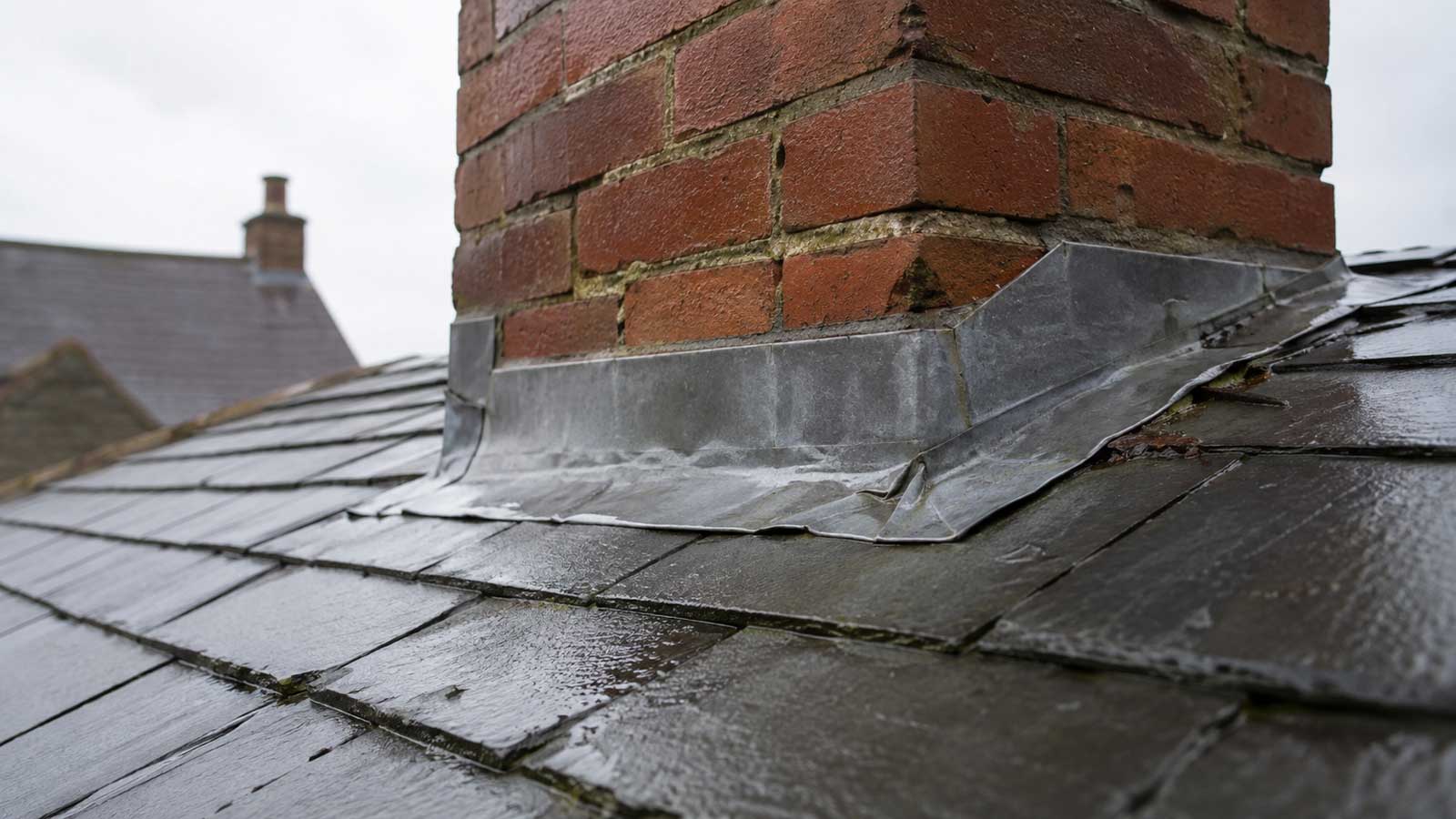
Check the chimney as a whole
Chimneys produce awkward leaks because several materials meet in a small area. Lead flashings cover the joint with the roof, soakers sit beneath slates or tiles at the sides, and mortar or render may be exposed above. On top, the flaunching around the pots has to shed water as well.
If the staining is on one side of the chimney breast, note whether that side faces the prevailing weather. A leak that appears only in windy rain often points towards a different defect from a chimney that becomes damp after days of steady rain.
Leadwork can look intact from the pavement
A front apron may be perfectly sound while a side flashing has lifted, a soaker has failed or a back gutter is blocked. Small splits at folds and corners are easy to miss from ground level. Smearing bitumen over every edge makes later inspection harder and is rarely a good long-term answer.
Lead also needs room to move as temperatures change. Long rigid runs and poorly detailed patches can crack. Proper repairs follow the shape of the joint rather than merely covering it.
Photograph the area before work starts if you can do so from a safe position. It gives you something concrete to compare with the finished repair.
Do not forget the masonry
Open pointing, cracked render and porous brickwork can admit considerable water. Chimneys are particularly exposed because all four faces receive weather over time. Flaunching around pots can crack and allow water into the stack.
Unused flues bring another issue. Cold, poorly ventilated flues can become damp internally, especially where old fireplaces have been closed without suitable ventilation. That can produce staining that looks remarkably like a roof leak.
What a useful inspection should establish
The roofer needs safe access high enough to see the side and rear details, not just the face visible from the garden. Ask what part has failed and how they know. Photographs are useful here because most householders will never see the back gutter or individual soakers from ground level.
If repointing is proposed, loose mortar should be removed to a sensible depth before new material is inserted. Simply brushing mortar over the surface tends not to last.
Need somebody to look at the roof?
If you want to ask local contractors about the repair, describe the symptom and include anything you have noticed about the weather or the part of the roof involved.
Request roofing quotesQuote requests are provided by MyJobQuote, an independent third-party service.