Start at the edges and outlets
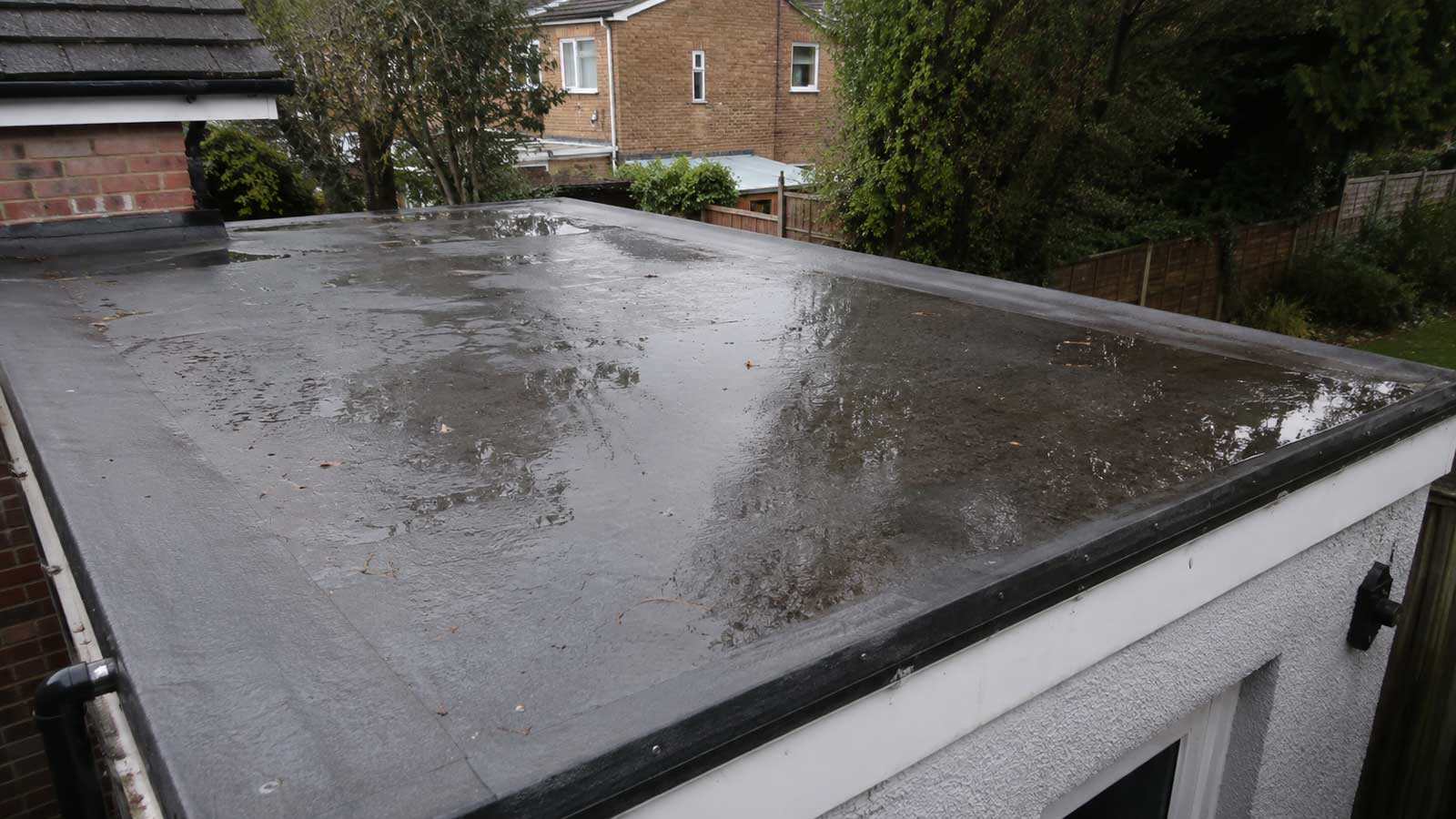
On a flat roof I would first look at the perimeter, wall junctions, outlets, upstands and any place where pipes pass through. These details move and weather differently from the main field of the roof. A broad damp patch below can still originate from a small split at one corner.
Standing water is worth recording. A little water after rain is not unusual on some older roofs, but deep persistent ponding adds load and exposes weak laps for longer.
What is the covering?
Felt, EPDM rubber, GRP fibreglass and older asphalt all fail in different ways. Felt may blister, crack or open at laps. GRP can crack around trims or movement points. Rubber membranes can suffer at bonded edges and penetrations. Asphalt can craze and split with age.
A compatible repair matters. Mixing products simply because they are sold as waterproof can create adhesion problems and make a later proper repair more awkward.
Bay roofs deserve the same care
Small bay roofs are easy to overlook because they are low and compact. They can still contain awkward junctions where the roof meets the wall or window head. Gutters may be shallow and outlets tiny.
If internal staining sits at one corner of a bay, inspect the external corner, adjacent pointing and any sill or wall detail above it. Water does not respect the neat outline of the roof covering.
Patch or renew
A local repair makes sense where the covering is generally sound and the defect is identifiable. A roof with widespread cracking, several previous patches and poor falls may keep producing new weak points.
The decision should come from condition, not from the fact that the roof is flat. Ask to see photographs of the defect and the surrounding covering before agreeing to a larger job.