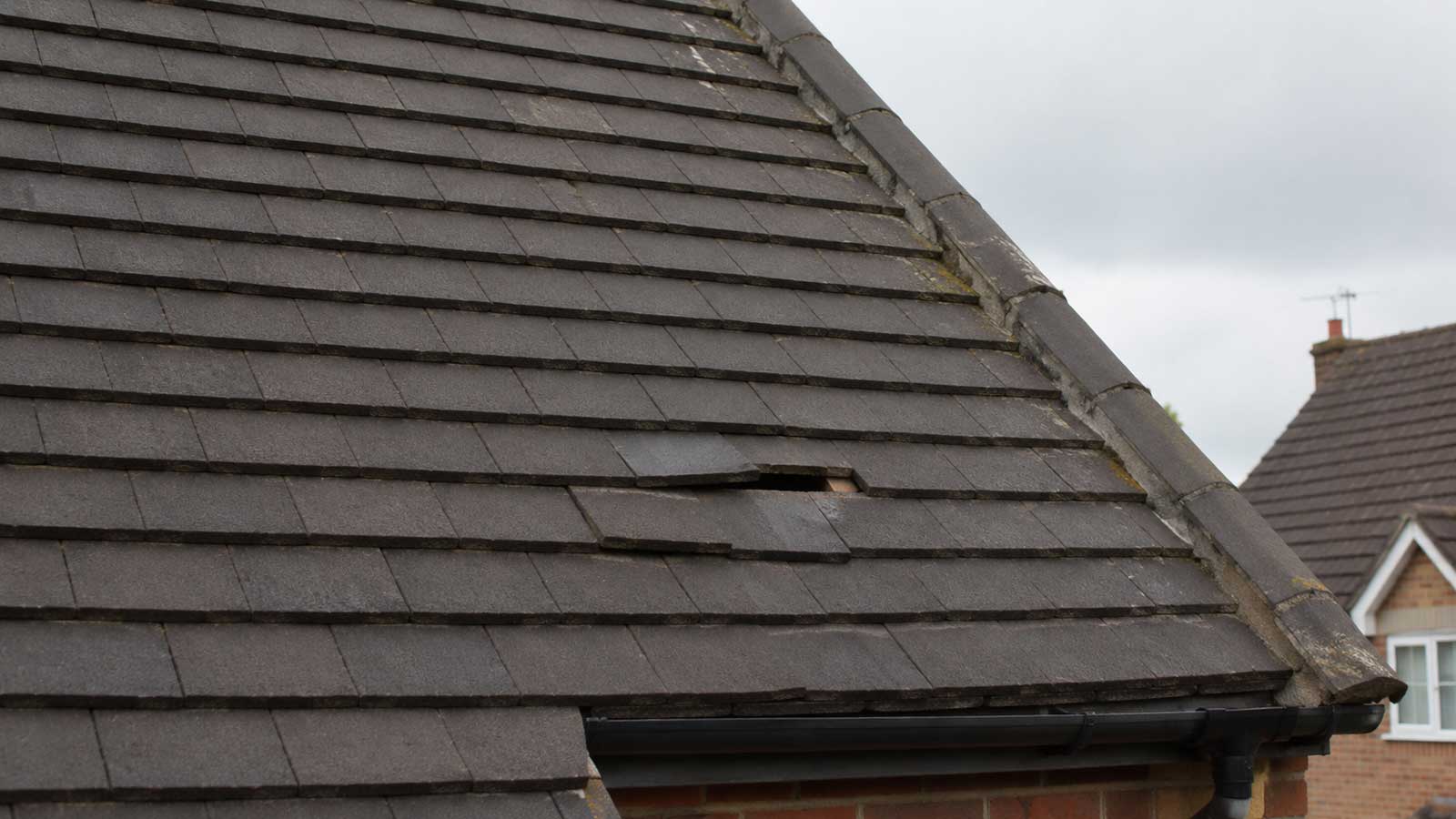
Cracks are not always obvious
Concrete and clay tiles can split while remaining almost perfectly aligned. The crack may open with temperature changes or only admit rain when wind pushes water across the lap.
From ground level, look for a sharp line, chipped corner or piece sitting slightly differently from those beside it.
Breakage has a cause
Impact, foot traffic, frost damage, movement and poor cutting around roof details can all break tiles. If several adjacent tiles are cracked in a line, think about how that happened before treating them as separate random failures.
Damage around a chimney or solar installation deserves a close look at previous access routes and fixings.
Photograph the area before work starts if you can do so from a safe position. It gives you something concrete to compare with the finished repair.
Replacement should match the profile
A tile that looks similar from the ground may have a different interlock or headlap. The correct replacement must fit the existing course. Older patterns can be difficult to source, and a suitable reclaimed tile may be used where appropriate.
Forcing the wrong tile into place can lift neighbours and create another leak.
Check the underlay while the tile is lifted
A local repair gives a useful view of the underlay and battens beneath. If the underlay is torn or the batten is decayed, the scope changes slightly.
That does not mean a large area automatically needs stripping. It means the repair should deal with what is actually exposed rather than placing a new tile over hidden damage.
Need somebody to look at the roof?
If you want to ask local contractors about the repair, describe the symptom and include anything you have noticed about the weather or the part of the roof involved.
Request roofing quotesQuote requests are provided by MyJobQuote, an independent third-party service.