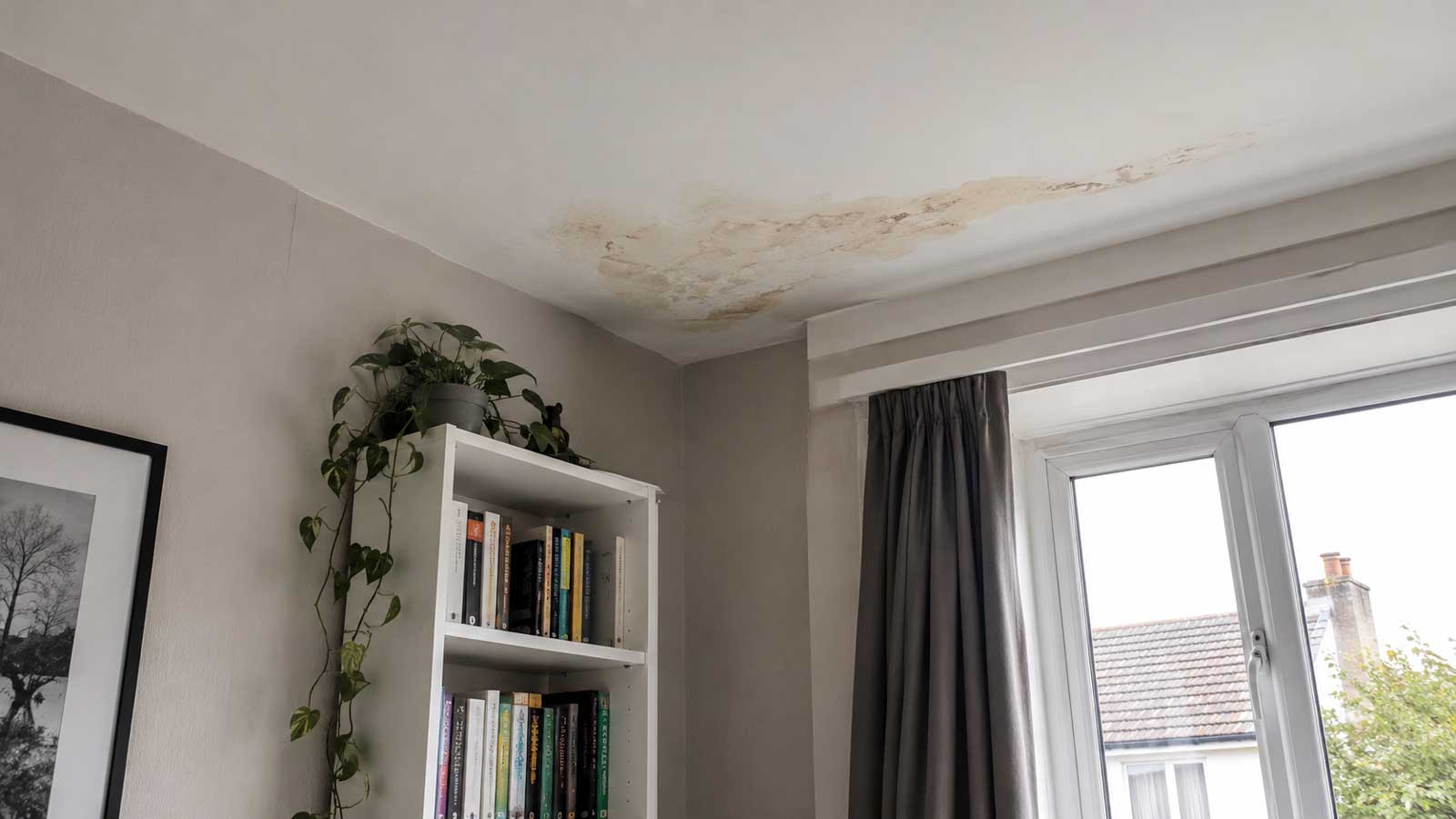
Make a simple leak record
Date, weather, wind direction if obvious, and how quickly the mark appeared. That is enough. You do not need a spreadsheet.
If the patch changes size, take a photograph from the same position. A stain that grows only after prolonged rain suggests a different route from a drip that starts within minutes.
Match the room to the roof
Work out what is above the damp area: open roof slope, chimney, valley, roof window, flat roof, gutter or wall junction. Remember that the roof slopes, so the entry point may be uphill.
In a loft, trace marks against the direction water would naturally run.
Separate plumbing and condensation
Check whether bathrooms, tanks, pipework or extract ducts are nearby. If the mark appears during dry weather, roof leakage drops down the list.
Condensation often shows as many small wet points rather than one route, but buildings do not always behave neatly. Use several clues together.
Give the roofer useful evidence
Send a broad exterior photograph, a closer view if safe from ground level, and one of the internal stain. Tell them when it leaks.
That information does not replace an inspection. It stops the first conversation beginning with nothing more than 'there is a wet patch upstairs'.