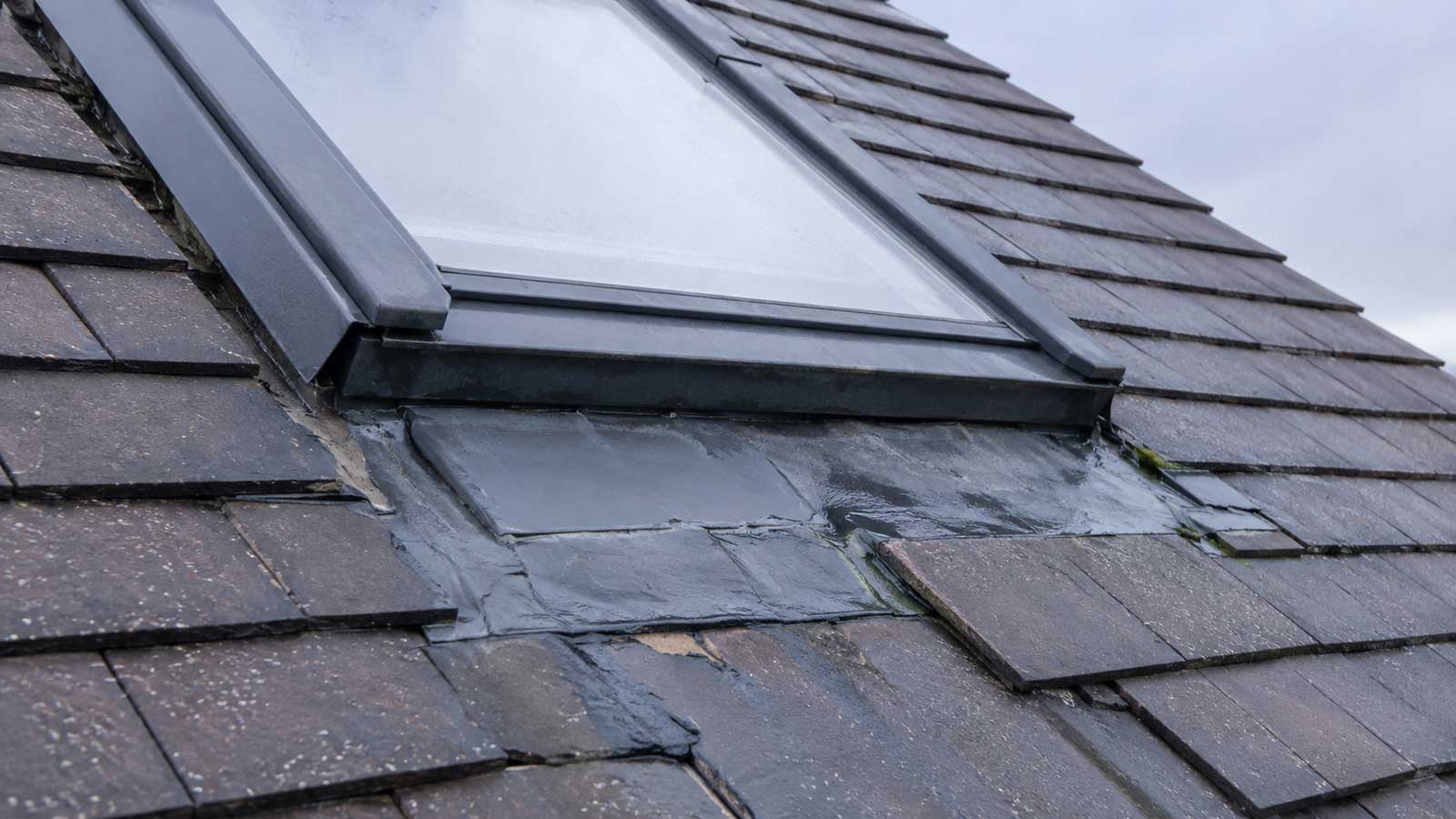
Look above the window
A wet corner on the lining does not prove the frame itself is leaking. A cracked tile or loose slate higher up can send water onto the flashing around the window. Leaves and moss can also collect against the top flashing.
The first inspection should include at least a short area of roof covering above and beside the unit.
Flashing kits are specific
Roof windows normally use a flashing kit suited to the type and profile of the surrounding covering. Incorrectly fitted side pieces, poor laps or a damaged top gutter can let water in.
Replacing random bits with sealant can interfere with the designed drainage channels. If the make and model can be identified, the correct detail is easier to establish.
Photograph the area before work starts if you can do so from a safe position. It gives you something concrete to compare with the finished repair.
Condensation on the frame
Roof windows are cold surfaces in winter. Moisture can condense on glass and frames, then run onto the internal lining. This is particularly common in bathrooms and bedrooms with high humidity.
If water appears on dry mornings or after showers rather than during rain, check ventilation and condensation before paying for external roof work.
Internal finishes hide the route
Plasterboard linings can absorb water and spread a stain. Once the source is repaired, the lining may need time to dry before decoration.
Repeated staining at the same corner after several different external patches suggests the whole window detail should be inspected systematically rather than another local seal being added.
Need somebody to look at the roof?
If you want to ask local contractors about the repair, describe the symptom and include anything you have noticed about the weather or the part of the roof involved.
Request roofing quotesQuote requests are provided by MyJobQuote, an independent third-party service.